
TRIONIC 5 CONVERSION
We are proud to offer the Trionic 5 conversion in our competences.
This conversion can be done on all SAAB 900 Classic with B202 & B212 16v engine.
The SAAB Trionic system has been developed in-house at SAAB and is first incorporated in 1993 into the SAAB 9000 2.3L Turbo to control simultaneously the ignition, fuel injection and boost pressure.
It is an absolute must have tunable upgrade for your classic SAAB 900 that improves drivability, reliability, performance, fuel efficiency and exhaust emissions.
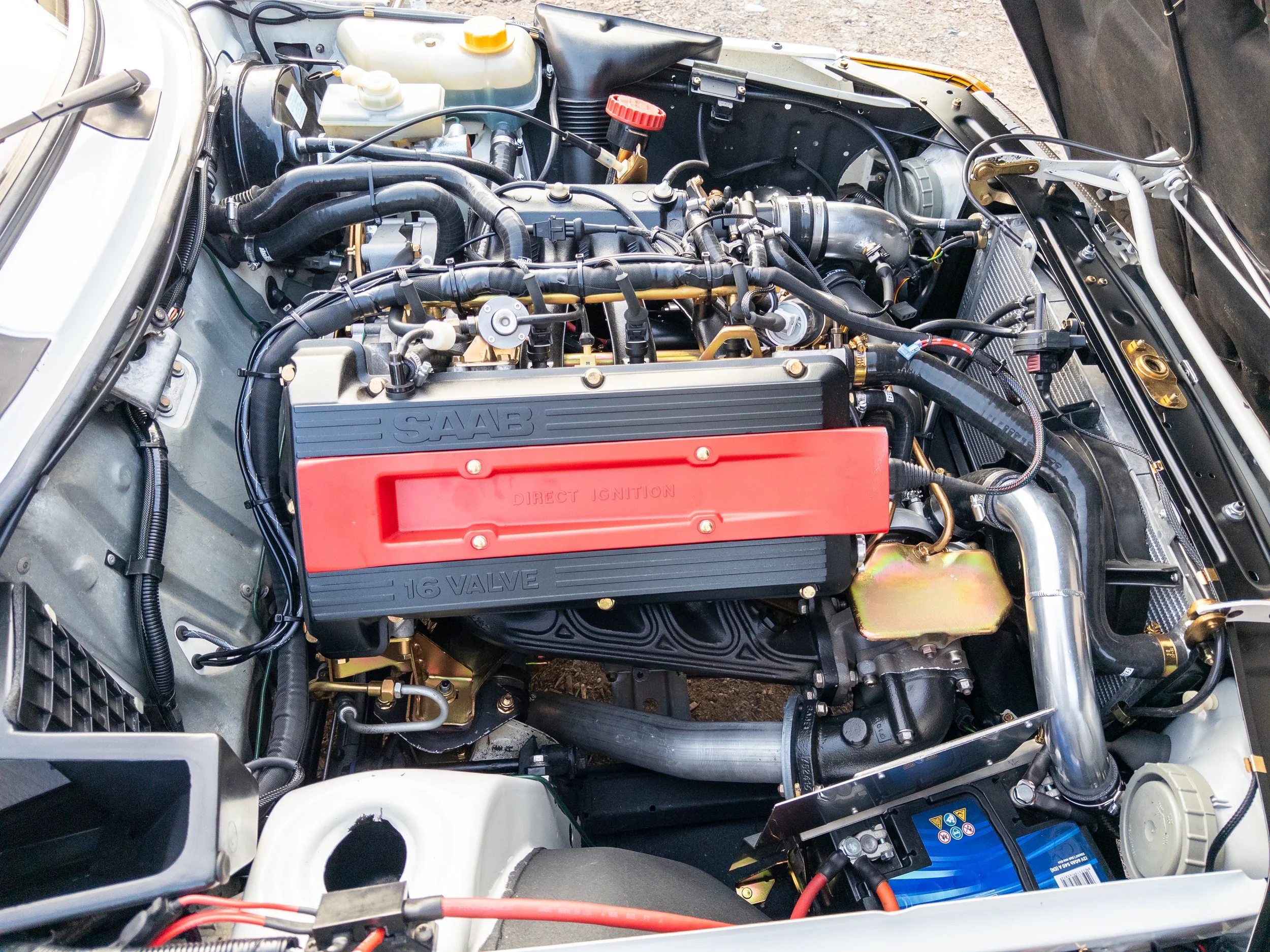
By converting your SAAB 900 Classic to Trionic 5 you can expect improvement on:
Drivability
Trionic 5 engine management is far more advanced than the stock Bosch LH or Lucas CU14.
It does not have mechanical limitations compare to it’s Bosch and Lucas predecessor. It will control ignition timing in all power range even on original set up engine. Things like unstable idle or slow response at lower power is now over. The benefits in drivability will surprise you and each drive will be a pure pleasure.
The unique SAAB Direct Ignition (DI) system equipped the Trionic system. It is a capacitive ignition system that has no moving parts and eliminates starting problems in damp and cold weather. Each spark plug has its own ignition coil which is mounted in a cartridge directly above the spark plug. This arrangement eliminates the need for high-tension leads, and the cartridge protects the ignition components from moisture and dirt, thus ensuring a reliable ignition spark.
The SAAB DI system can generate a spark firing voltage nearly twice as much compared in a conventional inductive ignition system. Even if the battery voltage is low, the SAAB DI system will still fire a reliable spark.
A further advantage of the SAAB DI system is the fast spark generation. The system is charged 20 times faster than a conventional ignition system. In addition to firing a reliable spark at high engine speeds, the design enables the system to fire an array of sparks instead of only one when the engine is started from cold. This array of sparks effectively burns away any soot or fuel on the spark plug electrodes, thus ensuring fast and reliable starting.
The integration of the various sub-system into the Trionic system ensures that the engine will start more quickly than it did in the other older system such as the Bosch LH, Lucas CU14, etc..
Reliability
Bosch LH and Lucas CU14 systems used some high quality strong mechanical components back in the days. But they are not indestructible and wear with age. And when they fail those components will need to be replaced or restored. That is when it becomes complicated. Some parts are not produced new anymore. And finding good quality restored and compatible components is a battle. It usually resolves into unsuccessful results or very pricy invoices.
Trionic 5 engine management uses components that are still produced today as Original or very good quality aftermarket parts. Only the ECU must be found second hand.
Those available components will speed up the parts sourcing and repair work. Customers will be back on the road with their SAABs rapidly.
One big advantage of the Trionic 5 system is that it can run the OBDII diagnostic interface and indicate error codes. This means that garage specialists or even customers themself will be able to plug in a code reader machine or a more advance diagnostic computers/tools and communicate with the ECU. Error codes will be shown and a specialist will be able to diagnoses the problem and correct it or repair it.
Every harness we sell are built with an integrated OBD2 port. Every ECU will also be updated.
A safety advantage that the Trionic 5 provides with its advanced technology over the old SAAB system is a better engine protection.
This will reduce the chances of over-boost, running to rich or to lean, overheat and other problems that can affect the engine health.
Performance and exhaust emissions
The main performance gains with the Trionic 5 are due to the full control of the engine’s ignition timing.
In the predecessors engine management that use a distributor with mechanical advance and retard system, the control is not that effective. Those distributor used to be setup with perfect timing under full load. It for sure comprised the rest of the power range to a less than optimal setup.
Ions (electrically charged molecules) formed in the combustion chamber after each combustion process offer unique opportunities for “looking into” the cylinder during each combustion cycle. A low voltage is applied across the electrode gap of every spark plug after each combustion cycle. The current flowing back to the control unit depend on the number of ions formed, and measurement of this current provides acknowledgement of combustion having taken place in each cylinder. If knocking or misfiring should occur, the boost pressure will immediately be adjusted.
Knocking that may occur in the engine due to difference in fuel quality is detected earlier with Trionic than it would have been by means of the knock sensor of the APC system alone. The knock sensor with APC performed basically as a microphone and was mounted on the engine block. The performance of this sensor could unfortunately be disturbed by mechanical noise in the engine. This disadvantage has been eliminated by the function being integrated into the SAAB Trionic system and being handled by spark plug. Ionization measurement is also used for automatic adjustment of the fuel flow if the combustion process should deviate from normal. This continuous monitoring, which takes place in each cylinder individually, enables the energy in the fuel to be utilized in the best possible way. As a result, fuel consumption is lowered and emission are reduced.
We @HEMIsphere Garage are equipped with the tools and software to tune and adjust Trionic 5 maps to a standard application or for more specific performance needs. Of course the configuration of the car has to be ready to accept those performance upgrades (more air, coolant and oil cooling, compression ratio, more fuel, healthy engine, etc..).
Fuel efficiency
Trionic 5 system is adaptive, which means that it ”learns” different driving conditions, variable climates etc. and stores this information for use under similar conditions that may occur in the future. The fuel injection but also the ignition and boost pressure are immediately adjusted to suit the driving conditions and variable climates.
Accurate control of engine combustion offers several benefits. The emissions can be restricted more simply than if a conventional system was used, and the fuel consumption is reduced.
In the past, the various sub-systems were controlled individually. It all started in 1980 when the APC system was launched. This system enabled the engine to put the fuel to the best possible use, regardless of its quality. The first LH fuel injection system was launched in 1984, and the SAAB Direct Ignition (DI) system was introduced in 1988. All of these systems have been integrated into a single control unit in the Trionic.
In the Trionic system, the air mass meter has been replaced by a pressure sensor which is mounted about one meter closer to the cylinders. So the fuel needed can be calculated more accurately. The injector of every cylinder is controlled individually. Every injector sprays the fuel in two jets, each of which is directed towards one of the intake valves of the cylinder. This improve further the accuracy with which the fuel is supplied to the engine. Immediately before the injector opens, the processor calculates exactly the amount of fuel to be injected into the cylinders on the basis of information on the engine load, speed, temperature, etc. Just before injection has been completed, the processor checks whether the driver has changed the accelerator pedal setting, and makes a correction, if necessary. The fuel injection control range is wide. From 2 milliseconds to the entire operating cycle.
This wide control range of the fuel system is an important factor when the engine is running only on alternative fuel, such as methanol or ethanol, or on low quality or low octane rating, or on a mixture of such a fuel and gasoline. The SAAB Trionic system is the key of the SAAB Multi-Fuel engine. This is due to the fact that the fuel consumption of an engine that runs on alcohol is twice as high as that of the same engine running on gasoline.
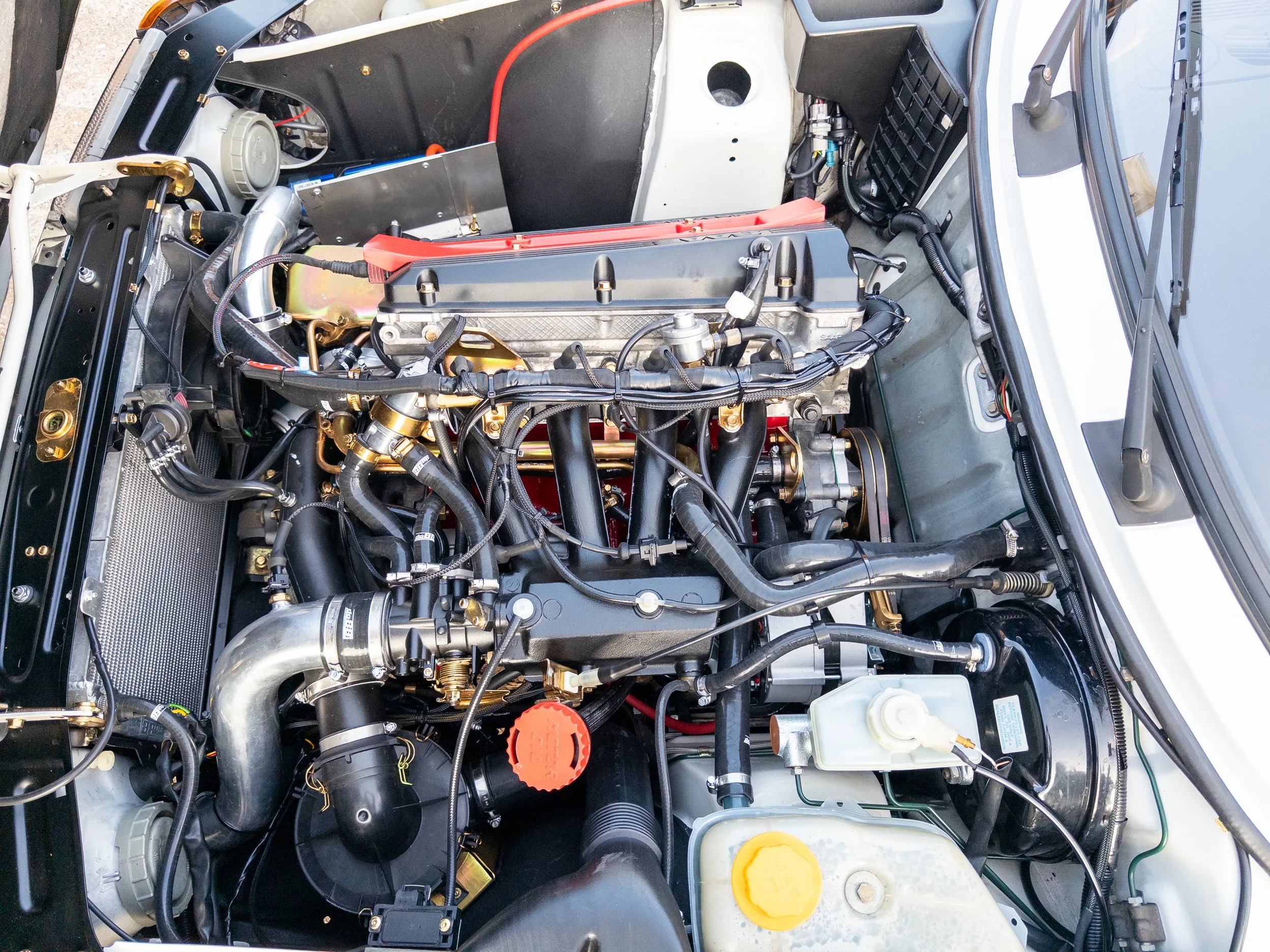
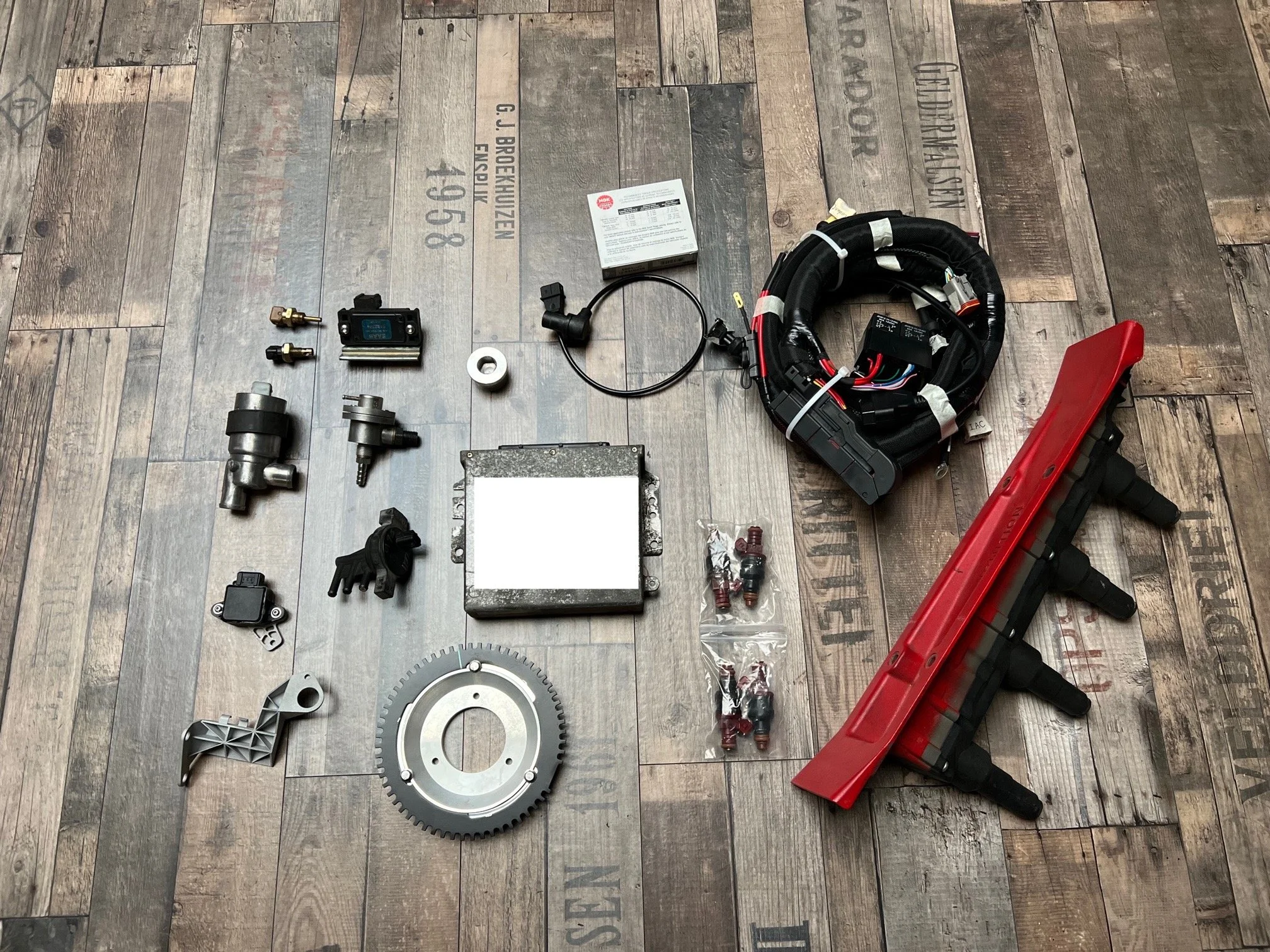
We have all the spare parts available in stock for your Trionic 5 conversion.
Parts from Original SAAB, original suppliers or high quality aftermarket suppliers.
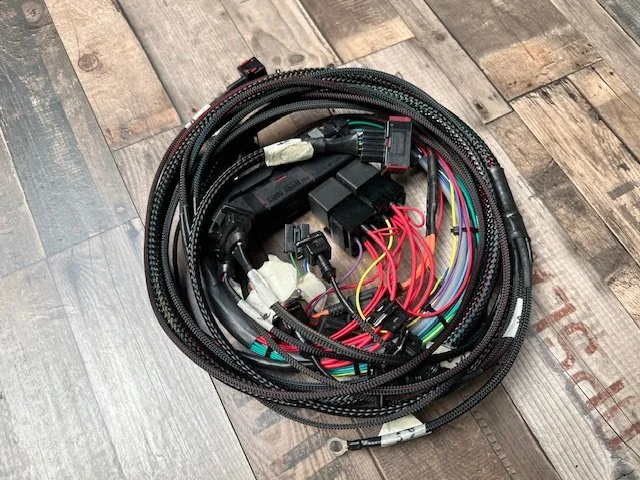
We also supply complete Trionic 5 wiring harness custom built new for the SAAB 900 Classic. Those are made to high quality standards.
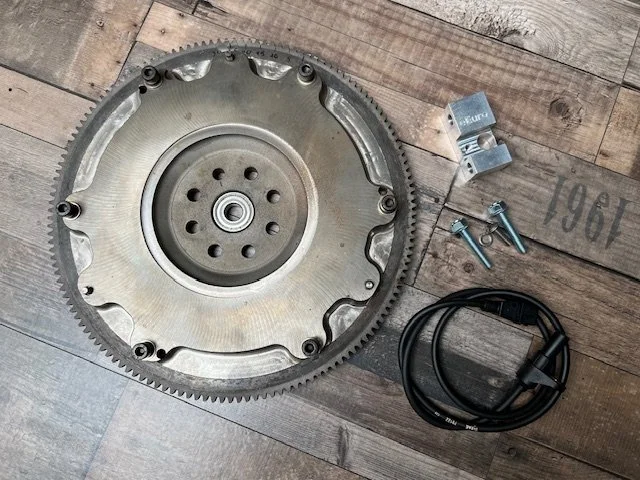
To complete your conversion kit we as well sell the triggering signal kit. High quality aftermarket parts.
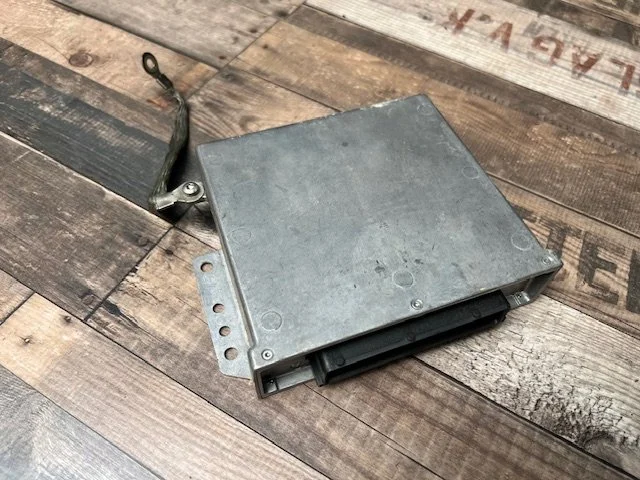
Don’t forget me! I am the heart of the Trionic 5 system!
We provide specifically tuned Trionic 5 ECU to finalize your Trionic 5 conversion purchase.